
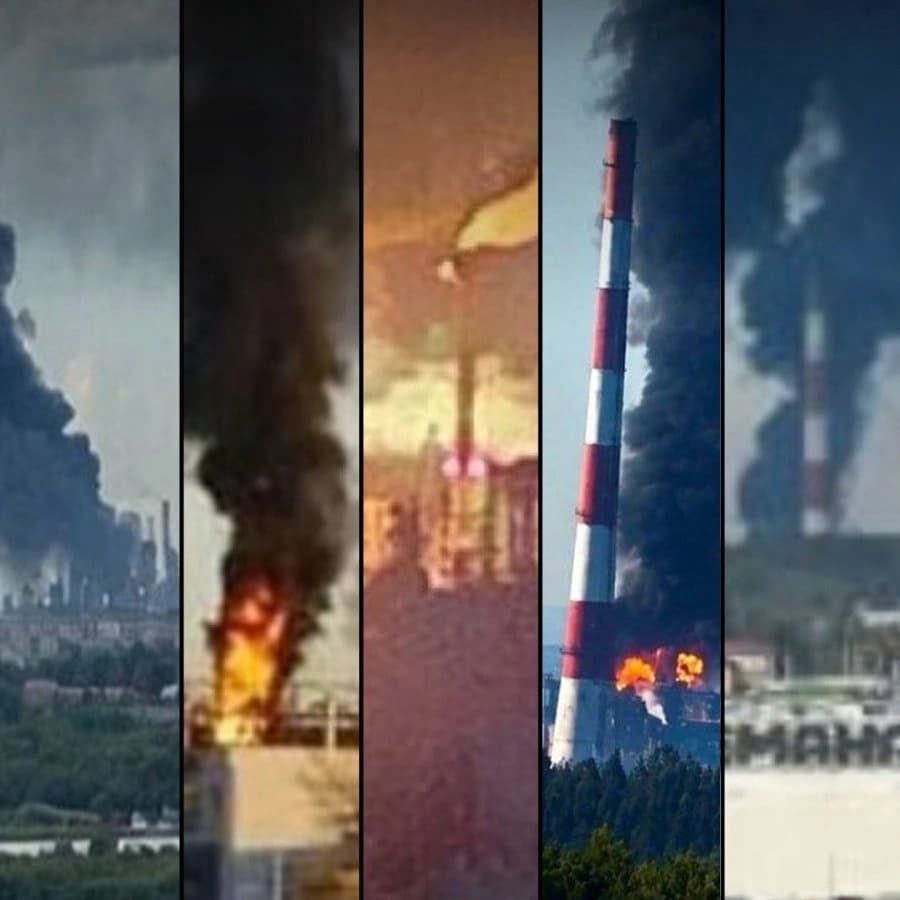
Since 30th October, Ukraine’s long-range sanctions have reached the Omsk, Kirishi, Ryazan, Nizhny Novgorod and Yaroslavl oil refineries, which rank among the five largest in russia. Smaller facilities, no less important to the enemy, have also come under attack, including the Novokuibyshevsk and Saratov refineries. The Defence Forces are systematically putting russian oil refining facilities out of action.
Nearly 2,500 kilometres from Ukraine’s border. That is the distance between Omsk and the front line. And it was there, on 11th November, that a fire broke out at the largest oil refinery in the russian federation. Units of the Defence Forces of Ukraine struck the Omsk Oil Refinery – a giant of russia’s oil refining industry that supplies fuel for the war against Ukraine every day.
The refinery has an annual processing capacity of more than 21 million tonnes of crude oil and one of the highest oil conversion rates in russia, at approximately 99%.
The damage caused by the strikes on the Kirishi and Saratov oil refineries has also been confirmed.
Overnight on 9th November, Kirishinefteorgsintez (KINEF) LLC in the Leningrad region was hit. The refinery has an installed capacity of approximately 20 million tonnes of crude oil per year and accounts for more than 6% of all oil refining in russia. It produces a wide range of petroleum products, including fuel for the armed forces of the aggressor state. The strike damaged an atmospheric distillation unit, an ELOU crude oil desalting unit and two cooling units.
Earlier, on 7th November, PJSC Saratov Oil Refinery was struck. With an annual capacity of approximately 7 million tonnes of crude oil, the facility serves the needs of russia’s military-industrial complex and armed forces. The strike damaged the refinery’s only primary crude oil processing unit, AVT-6, two fuel hydrotreating units, pipelines and a storage tank with a capacity of 10,000 cubic metres, which caught fire. The facility has been shut down.
Strikes on primary crude oil processing units reduce fuel production for the russian military and cut the revenues russia uses to finance its war.
Distance is no longer a safeguard. Whether in Siberia or in regions closer to Ukraine, Ukrainian warriors can reach the enemy wherever it produces the means to wage its war.
In exercising their right to self-defence under Article 51 of the UN Charter, the Defence Forces will continue taking systematic measures to compel russia to end its armed aggression against Ukraine.
To be continued!
Glory to Ukraine!
Read also
All news


